Fall armyworms can quickly become a serious problem in pastures, hay fields, and lawns during late summer and early fall. These pests feed on grass leaves and can cause major damage within just a few days, leaving behind bare stems and brown patches. As they move through fields in search of new food, damage can spread quickly, reducing available forage and hay yields.
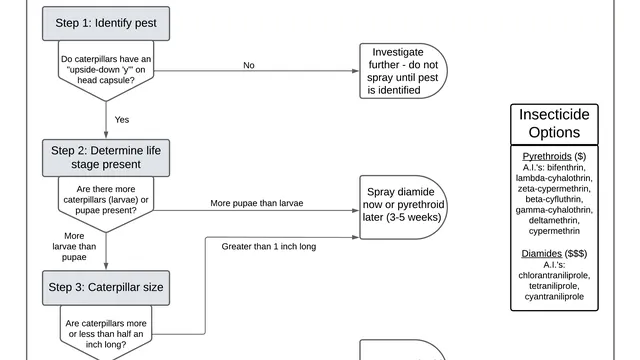
Regular scouting is important for catching an infestation early. Look for small, striped caterpillars that range from light green to nearly black and have a distinct light-colored, upside-down “Y” marking on their head. To scout, ruffle the grass and check the ground for caterpillars. Examine several areas of the field and count the number found within a 1-square-foot area. If you find an average of more than three caterpillars that are at least ¼ inch long per square foot, treatment may be necessary. Early signs of feeding can include pale or translucent patches on grass leaves, giving the field a frosted appearance.
If armyworms are found, quick action is important. Depending on the situation, control may include using an insecticide approved for pastures or harvesting hay before the caterpillars consume the remaining forage. Always follow pesticide label directions, including any grazing restrictions. Once a field has been heavily defoliated, spraying may provide little benefit, and additional steps such as fertilizing or reseeding may be needed to encourage new growth.
Frequent scouting and early action can help prevent serious losses and protect your pastures, hay fields, and lawns. Don’t wait until the grass is gone—by then, the armyworms may have already done significant damage. Contact your local Extension office for more information and management recommendations.
N.C. Cooperative Extension is an equal opportunity provider.